Wednesday, 19 July 2017

What teasing might be teaching our kids

At a local dinosaur park I witnessed a father scaring his two young kids and then laughing at them saying “ha ha, you were scared” in the same way as you would expect children in the schoolyard to do when they tease one another. And then it struck me - are we inadvertently teaching our kids to tease one another and in more extreme cases bully one another by our own interactions with them? I had always thought that the meanness and teasing that was present at school was just how kids are but now I suspect that we are actually teaching this kind of behaviour to our kids. This dad was clearly just playing around and didn't mean anything by his actions but he failed to realise that this was the behaviour he was modeling to his kids - it's ok to tease others, to scare them and to laugh at them. These kids didn't seem hurt by their dad's jibes but the problem is that they learn these interactions and replicate them with others who may feel hurt by them and in situations which may not be appropriate.


The other problem I have with this man’s teasing is that he was shaming his kids for having a perfectly normal and natural emotion - fear. He was not so subtly teaching them that it is not ok to feel fear, that it's something to be humiliated for. I sadly see this a lot at this dinosaur park - parents saying things to their children like “don't be such a wuss” and “you're always so scaredy”. You might as well be whispering in their ears “it's not ok to feel scared, you shouldn't feel scared, there's something wrong with you if you do feel scared.” When you invalidate a child's feelings they're going to naturally turn to experiencial avoidance - they will try to not feel those feelings that they have been told not to feel. In ACT’s view this experiencial avoidance can lead to greater suffering - for example, maybe they refuse invitations to sleepovers because they don't want their friends to know they're afraid of the dark leading to feelings of isolation and perhaps thoughts of “nobody likes me anyway” which could lead to further avoidance of other social situations and further unhappiness. Once learned, experiencial avoidance can be a hard habit to break so maybe we should try to keep our children's minds open about experiencing painful emotions. It's ok to feel these feelings, it is normal to feel these feelings, they may feel big right now but they can never get bigger than you, you can contain them and they will pass like clouds in the sky.

Saturday, 15 July 2017

Impact of my animation

I was honoured to have my animation shown to over 100 psychologists and mental health professionals at the conference I attended earlier this week.


For those who don't know, I made this animation as one of my weekly goals in the later weeks of ACT group therapy. I had been unable to animate for a long time prior due to my intrusive thoughts and the feelings they evoked in me every time I sat in front of the computer to work. So it was a big part of my recovery and a testament to the efficacy of the ACT techniques that I managed to make this animation.

Though I have shown it to many classes in the Recovery College over the years and always received praise for it, I never really got the impression that it could be useful to psychologists and their work. I am naturally quite modest about my work and find it very hard to believe that anyone finds any value in it. But at the conference I was approached by several professionals who were very enthusiastic about the animation and wanted to use it in their work. I was also told by one professional to whom I had given permission to use it several years ago that it had been so helpful in her work. I had never really thought that my animation could be that helpful to people and am proud to have it freely available on YouTube so others can find it and use it in their work.

Tuesday, 11 July 2017

Aging and turning towards my fear of it.

Earlier this week I attended a conference dedicated to ACT and RFT. In one of the talks we were asked to speak to one another about aging. This is a topic I find quite difficult - I have a deep fear of aging and find it uncomfortable to turn my attention to the subject. But I wanted to take part in the exercise and so I did allow my mind to explore my feelings about aging and opened up to those around me about it.

I found this experience very useful - by discussing it, I realised that I don't really care about my looks changing or my hair greying. My fears lie in the idea of being less physically and mentally able to do what I enjoy doing and what's important to me.


I've returned to this thought in the following days - the fear of losing physical and mental abilities. Obviously I can't prevent what the natural aging process will eventually bring but I realised that there are things I could do differently right now to minimise the risk of certain debilitating diseases that might develop in later life. I am currently overweight and do little exercise. If I look after my health better, I can increase my chances of getting to old age with some of my mental and physical abilities still intact. This has galvanised me into focusing more on my value of health and in treasuring the present while I do have all these abilities still available to me.

By turning towards the subject of aging, despite my fear of it, I managed to define what exactly I am afraid of. Only then could I look at what I am currently doing and what I could be doing differently to minimise the chances of my fears coming true or at least delaying them for as long as possible. There's nothing I can do about the years of poor care I have given my body, but every day I can work towards changing the current trajectory to something better. And that is enough for me. I can accept the natural decline of my body but I can't accept self-inflicted infirmity.

I've found that through this process my fear about aging has lessened somewhat. I guess my fear was more accurately a fear of losing physical and mental abilities sooner than necessary because of poor and selfish choices I make now. I think the point of the exercise had been to practice letting go of wanting to control things outside of our control and I am happy to do that in reference to the natural aging process but when it comes to the potential impact of my current actions on my future health then I am happy to use my problem solving mind to come up with solutions. Looking after my health now may make no difference, I've never smoked in my life and I could still end up with lung cancer but at least whatever hits me I'll know that I tried my best.

Tuesday, 20 June 2017

My trip to the splash park

We've been having a bit of a heatwave here recently and our house has become unbearably hot so I decided to take my toddler to a splash park one afternoon. I find the idea of going to such places quite difficult: the crowds of people, the worry about keeping my toddler's skin safe from the sun, the arduous drying and dressing afterwards; I feel stressed just thinking about it. Despite these thoughts, I packed our bag, dressed in some old clothes, dressed my girl in an oversized sun suit, slavered the rest of her in suncream and we set off.


My toddler is at an age where she still likes to keep me close by, especially in new places and I wanted to stay close to her to ensure her safety. So hand in hand we walked about the splash park. After a short time, I started to notice myself draw back from the various sprays of water my toddler wanted me to go into with her. I would interact half heartedly and avoid getting wet as much as possible. I wasn't having much fun and could feel my stress levels soaring. I felt very disconnected from my daughter.

Once I noticed what I was doing and how I was feeling, I turned to my values - how do I want to be acting in this situation? I realised that I really didn't want to be the parent who sits at the side and brushes off the pleas of their children to play with them. Fair enough, I wasn't being like that but then I asked myself to instead imagine what sort of parent I would like to be like. I instantly imagined a fun, carefree parent getting fully involved and utterly soaked in the process of playing with her child. That's what I wanted to be. Maybe I couldn't be all of that, but that was the direction I wanted to head in. I quickly realised that what I needed to do was to let go of the idea of staying even remotely dry. So I went through the sprays, I put my feet in the fountains, I stood under the tippy buckets and I went down the waterslide with my daughter in my lap a bazillion times. I noticed that as soon as I allowed myself to get soaked I started to have fun, lots​ of fun. I reveled in experiencing the water with my toddler and felt like I was almost experiencing it all through her eyes. I felt so connected with her. She had an amazing time too - running around shouting “I love the splash park!” over and over.

I used several ACT tools that day - defusion to help distance myself from my unhelpful thoughts about going to the splash park, enabling me to get out the door; noticing my present moment experience to help me realise that I was avoiding getting wet and feeling pretty unhappy; then turning to values to help me understand how I really wanted to be behaving in that situation and using them as a guide to help me change my behaviour. It is quite clear that without these tools I could have let my lifespace shrink that day - without defusion I would have avoided leaving the house and missed the opportunity for so much fun, if I hadn't noticed my behaviour and feelings then I would have had no reason to check in with my values and without exploring my values I would not have known how to act differently and consequently would have had a far less fun experience and likely gone home earlier.

I think overall that this is a nice example of how the different ACT tools can work together to help create powerful shifts in our behaviour and help us live more fulfilling lives one day at a time.

Friday, 12 May 2017

The problem solving mind is not always the best guide

I got some new craft materials for my toddler the other day. When she was finished this is what my floor looked like.


Instantly my mind came up with a solution - “just vacuum it all up”. This is a great example of the problem solving mind in action - giving suggestions for the easiest solution to the problem in front of me. Indeed I could have vacuumed up all the mess but that would have been going against my value of not being wasteful. I value not throwing useful things away and I value our finances which can't afford me vacuuming up perfectly useable craft materials.

This shows how important knowing our values is. If we always follow the instructions from our problem solving mind then we could end up living a life that is against our values - always doing the easiest thing rather than what is right for us.

With my values as guidance, I chose to painstakingly pick up every one of those beads and sequins. It certainly took a lot longer​ than the vacuum would have but I felt satisfied that I had followed my values and now my toddler has craft stuff at the ready for the next time she desires to spread sequins all over the floor. Though next time I won't be giving her the entire packet, maybe just a handful.

Sunday, 7 May 2017

Improvements in psychological flexibility

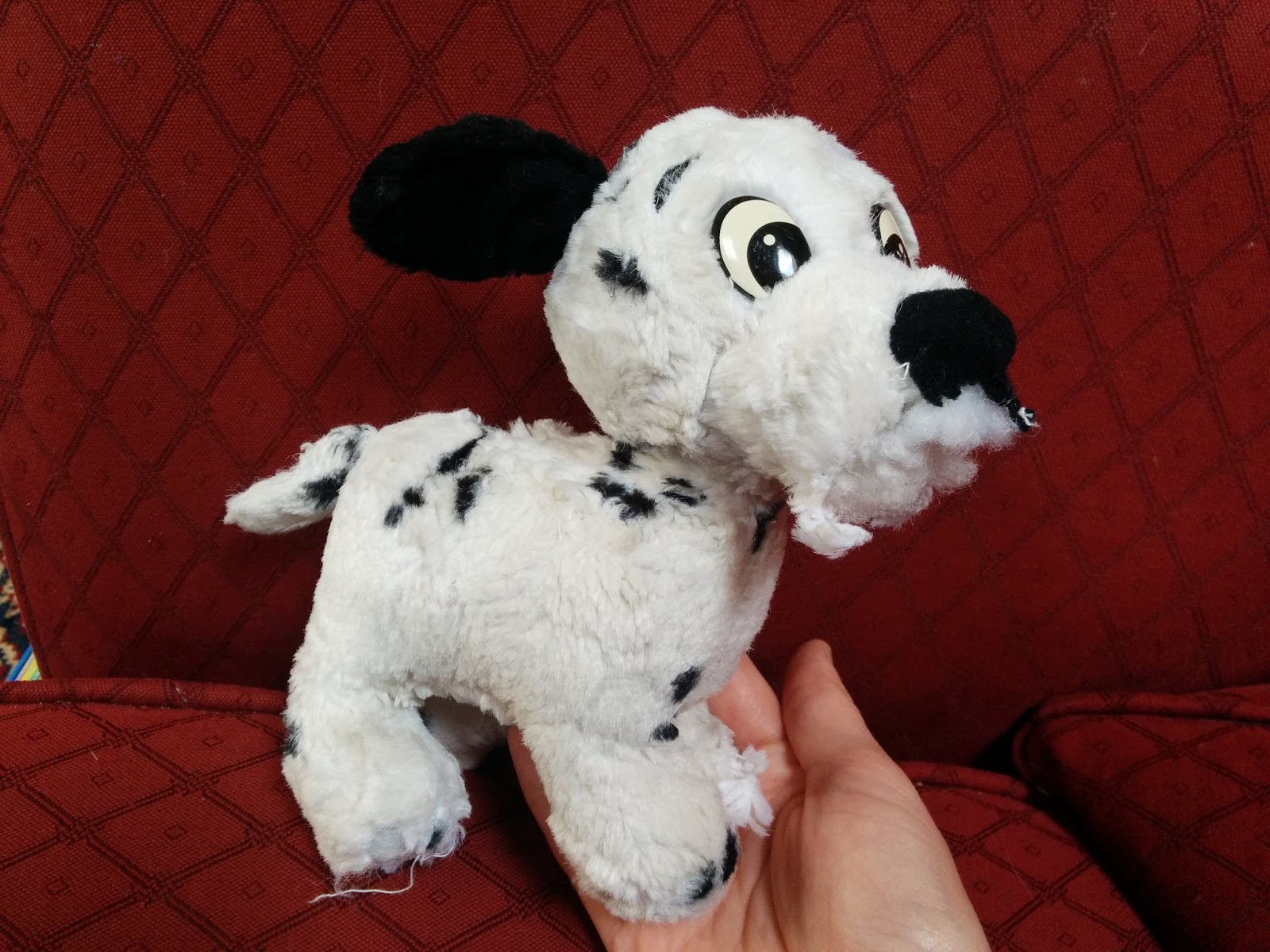
When I was a small child I had a favourite cuddly toy called Fantasia. He was a small dalmatian puppy from the Disney movie and he would often go everywhere with me and I would cuddle him every night as I slept. My daughter has recently taken a great interest in the 101 Dalmatians movie so I decided to root around in the attic and find Fantasia for her. Unfortunately I wasn't the first to find him.


Mice had gotten into the bag and had eaten large pieces from his paws and face. Needless to say I was devastated - he had such special significance to me and I felt responsible for having stored him in the attic rather than elsewhere in the house.

What really surprised me though was how quickly I was able to come around to accepting the situation. In the past, something like this would have sent me into a spiral for days if not weeks or even months. It would have started with huge amounts of self blame - why didn't I keep him out of the attic? Why didn't I put him in something mouse proof? I would have been vicious to myself, telling myself how much I hate myself, how useless I am, I can never do anything right, I am an idiot, etc. I would have also tried to deny that it had happened or at least desperately try and will it not to have happened. I wish I had done this or that this hadn't happened etc.

This time however was surprisingly different. I was first hit by a huge wave of sorrow and regret but I didn't cling onto any of it like I used to. Within about half an hour I had accepted what had happened and decided that I would wash Fantasia and the other cuddly toys from the bag and do my best to repair them as best I could so my daughter could enjoy them. I still felt sad about what had happened but I didn't keep blaming myself and beating myself up like I used to.

This really demonstrates how much more psychologically flexible I am than ever before. I think that prolonged use of ACT has actually changed the way my mind works. I am fascinated to see whether this sense of psychological flexibility can be maintained and increased with further practice.

Saturday, 22 April 2017

Depression, again.

I haven't written anything in a while now because I have been hit with a large wave of depression. It's hard to write about this stuff while you're in it and so easy to forget the details when you're out of it again. I'm​ going to try my best to write about it though.


It came on very gradually, almost insipidly, possibly triggered by several small events and disappointments in my life which I failed to notice that I had started struggling with and suppressing the feelings of. It snowballed with me not feeding myself properly and ceasing all exercise, making me feel even worse. I felt a deep lethargy which may have been caused by the depression or the poor eating habits - most likely a bit of both. These lethargic feelings lead me to doing less around the house and made me withdraw from activities in general which left me feeling overwhelmed by my everyday chores and my life felt lonely and lacking in any fun or relaxation. My days became a pattern of desperately waiting for my toddler's bedtime and then spending the evening simply waiting until it was my bedtime. By the time, after a fairly long decline that the death of my Grandmother came about, I was so numbed by depression that I didn't really feel much. This made me feel very guilty - she was a wonderful, kind woman who was a big part of my childhood, how dare I not feel anything? It was only when my depression started to lift a few weeks later that I started to feel the natural grief feelings I had been expecting.

I admit that I had naively thought that I was immune to depression with ACT at my side, but I'm now realising that life just isn't that simple and that I still need to practice more. ACT may not have made me immune to this bout of depression but it has freed me from its clutches for the majority of the time compared to the years of near constant depression I have experienced in the past. I believe the ACT tools helped to keep this depression from reaching the dangerous depths of precious bouts, though I was still surprised by how deep this one went.

The main difference between this depression and previous ones is that I noticed what was happening to me, at least once I had identified that I was depressed. I consciously made the effort to notice the thoughts and feelings I experienced from moment to moment and this may have helped me to start the process of bringing myself out of the depression. I noticed the urge to suppress my feelings with my old avoidance strategy of eating chocolate. Particularly notable was that I was conscious of the fact that this bout of depression was only temporary and that I would come out of the other side eventually. This contrasts with my old way of thinking that things will never change and I'll feel this way forever. I believe that my use of ACT lead to these changes in my experience of depression.

Getting out of this depression took a combination of several factors - accepting where I was, forcing myself to prepare and eat sensible foods, limiting the times I ate comfort foods, taking advantage of any moment the lethargy lifted and facing some of the thoughts and feelings I had been hiding from, not all at once and with kindness towards myself. I also talked to my husband about the thing I was most stuck with, which helped me to untangle the thoughts going through my head. This process took several weeks with some days going better than others. I am now back to normal again and grateful to be feeling better with some extra knowledge about myself.